
Why We Think We Have More Time With Our Parents (But Don’t)
My parents are in their mid-sixties.
Over the holidays, something settled in.
The average life span is 78.
That gives me maybe 15 good years left.
Fifteen.
I am not writing this with fear. I believe there is hope beyond this life.
I am writing it with intention.
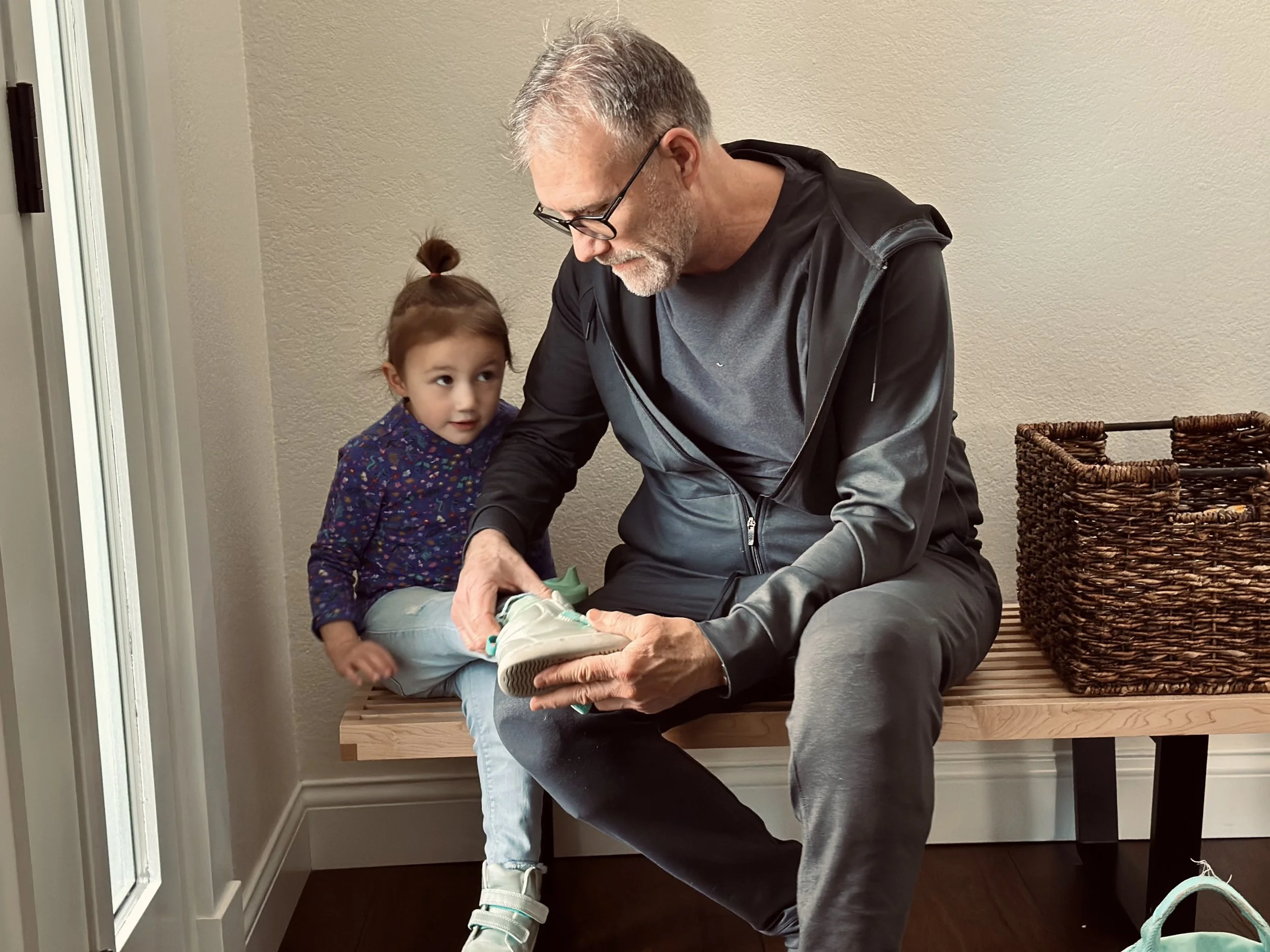
Because when you look at time like that, you start asking different questions.
What stories do I still need to hear?
What moments do I want to capture?
What do I want my kids to know about the people who raised me?
Most of us do not decide to lose our parents’ stories.
We just assume we will get to them later.
Later, when life slows down.
Later, when the kids are older.
Later, when work is less demanding.
Later, when we have the right questions.
Later, when we have more time.
But later is slippery.
Not because we do not care.
Because life is loud.
Because days fill up fast.
Because good intentions get crowded out.
And because we quietly believe something that is rarely true.
We believe we have more time.

The assumption that keeps us from pressing record
When your parents are here, it is easy to treat them like a constant.
A phone call you can make.
A visit you can schedule.
A question you can ask someday.
We do not think, “This is the last time they will tell that story.”
We think, “I will ask them again.”
We do not think, “I should record this.”
We think, “I will remember it.”
But memory is not a safe place for things you cannot replace.
Why we overestimate time with our parents
Time does not feel limited when nothing is obviously wrong.
If your parents are still active, still healthy, still “fine,” your brain files them under safe.
And safe things get postponed.
We are not wired to feel urgency without a trigger. So we wait for one.
A scare.
A diagnosis.
A fall.
A hospital visit.
But stories should not require a crisis to be preserved.
Most families do not lose stories all at once. They lose them in small, quiet ways.
A detail that fades.
A name that slips away.
A story that used to be told easily, now told with more effort.
A memory that turns fuzzy around the edges.
Time changes people slowly, then suddenly.
The real reasons we do not record their stories
Most people say the reason is time.
But time is rarely the real reason.
Here are the ones that show up most often.
1) It feels emotionally heavy
Recording a parent’s story forces you to face something you would rather not.
Aging.
Change.
The reality that your time together is not unlimited.
Even if you never say it out loud, your heart knows what you are doing.
You are trying to keep something.
That can feel like grief before grief. So we avoid it. Not because we are careless, but because we are human.
2) We think it has to be perfect
We picture a big production.
A clean house.
A perfect script.
A flawless interview.
A camera we do not own.
A day we do not have.
So we do nothing.
But your family is not looking for perfection.
They are looking for their voice.
Their laugh.
Their expressions.
Their unique way of telling a story.
Sometimes the shaky, imperfect moments are the most priceless ones.
3) We do not know what to ask
You want to do it right. You want to honor their life.
So you delay until you can “prepare.”
But the right question is often simple.
Tell me about your childhood.
What was your mom or dad like?
How did you meet?
What is something you are proud of?
What is a hard season that shaped you?
You do not have to ask the perfect question.
You just have to start.
4) Legacy whispers while life screams
There are bills.
Deadlines.
Kids’ schedules.
Home projects.
Text messages.
Travel.
Responsibility.
Legacy does not demand attention. It waits.
And because it waits, it gets pushed to the bottom of the list.
Until one day, you would give anything to bring it back to the top.
5) We believe tomorrow will feel easier
This one is subtle, but powerful.
We assume that someday we will have more energy. More margin. More clarity.
But tomorrow usually looks a lot like today.
If you are waiting for life to calm down before you record your parent’s stories, you might wait forever.
The best time is rarely the perfect time. It is simply the time you choose.
If you have ever done the math in your head and felt your chest tighten, you are not alone.
That feeling is not meant to produce panic.
It is meant to produce presence.
You do not need a documentary. You need a moment.
If you are waiting for the ideal setup, you will probably never do it.
So here is a better goal.
Record one moment.
One story.
One memory.
One question.
Twenty minutes.
If you do that, you have already done something meaningful.
And you will be surprised how quickly one moment turns into two, then five, then a collection your family will treasure.
A simple 20-minute plan to record your parent’s story this week
You can do this with your phone.
No equipment.
No script.
No complicated setup.
Step 1: Pick a date in the next 7 days
Do not say “soon.”
Pick a day and put it on the calendar.
If you wait for motivation, you will keep waiting.
Choose a date.
Step 2: Send this text
“Hey, I want to record a few stories from your life for our family. Nothing formal. Just 20 minutes. Could we do that this week?”
Most parents will feel honored. Some will be caught off guard. A few will ask, “Why?”
You can answer with one sentence:
“Because I do not want to lose them.”
Step 3: Choose 3 questions and keep them simple
Here are three that open doors without feeling forced:
What is a story from your childhood you still remember clearly?
What was your mom or dad like when you were growing up?
What is a hard season you went through that shaped you?
If you want a few lighter options, try:
What did you do for fun as a kid?
What was your first job?
What is a moment you still laugh about?
You are not trying to cover their whole life in one sitting.
You are simply starting.
Step 4: Record it and let it be imperfect
Find a quiet spot. Sit close. Hit record.
If it feels awkward at first, that is normal. Keep going.
Give them room to think. Do not rush the silence. Some of the best stories show up after a pause.
And if someone gets emotional, do not panic. Just stay with them.
You are doing something that matters.
Step 5: Save it twice
When you are done, save it in two places.
Your camera roll plus a cloud folder.
A hard drive plus a shared family album.
Do not let it live only on one device.
Step 6: Repeat monthly, not perfectly
One story a month becomes twelve stories a year.
That is not a project. That is a legacy.
Small consistency beats big intention every time.
What you will never regret
You will never regret capturing your parent’s voice.
You might regret waiting.
One day, you will wish you could ask one more question.
Hear one more laugh.
See their eyes light up when they remember.
You cannot create more time.
But you can make good use of what you have.
Ask the question.
Press record.
Capture the voice.
Don’t wait.
